
José Mourinho: Defence, Detail and the Special One Legacy

When José Mourinho knocked on Old Trafford's turf after Porto eliminated Manchester United in 2004, sprinting down the touchline to celebrate, football met a coach who treated defence as a form of aggression. Within eighteen months he had declared himself the Special One in London and turned Chelsea into the meanest defence in Premier League history. Two decades on, his methods are quoted as often as his press conferences.
The lazy reading of Mourinho is that he parks buses. The accurate one is that he prepares for opponents with a detail few rivals match, then builds a compact structure that turns their strengths into traps. The trophies, league titles in Portugal, England, Italy and Spain, say the approach was never only negative.
Porto and the blueprint
Mourinho arrived at Porto in January 2002, after an education as translator and assistant to Bobby Robson and Louis van Gaal at Barcelona. In 2003 Porto won the UEFA Cup; in 2004 they won the Champions League, beating Monaco 3-0 in the final, with a squad of players most of Europe had never scouted. The blueprint was already visible: a narrow, disciplined block, full-backs who chose their moments, and transitions rehearsed to the second.
What set Porto apart was preparation. Mourinho's staff produced dossiers on opponents that players described as exhaustive: set-piece habits, which shoulder a winger favours, how a centre-back behaves when pressed on his weak foot. The low block was the stage; the homework was the play.
The defensive masterclass, defined
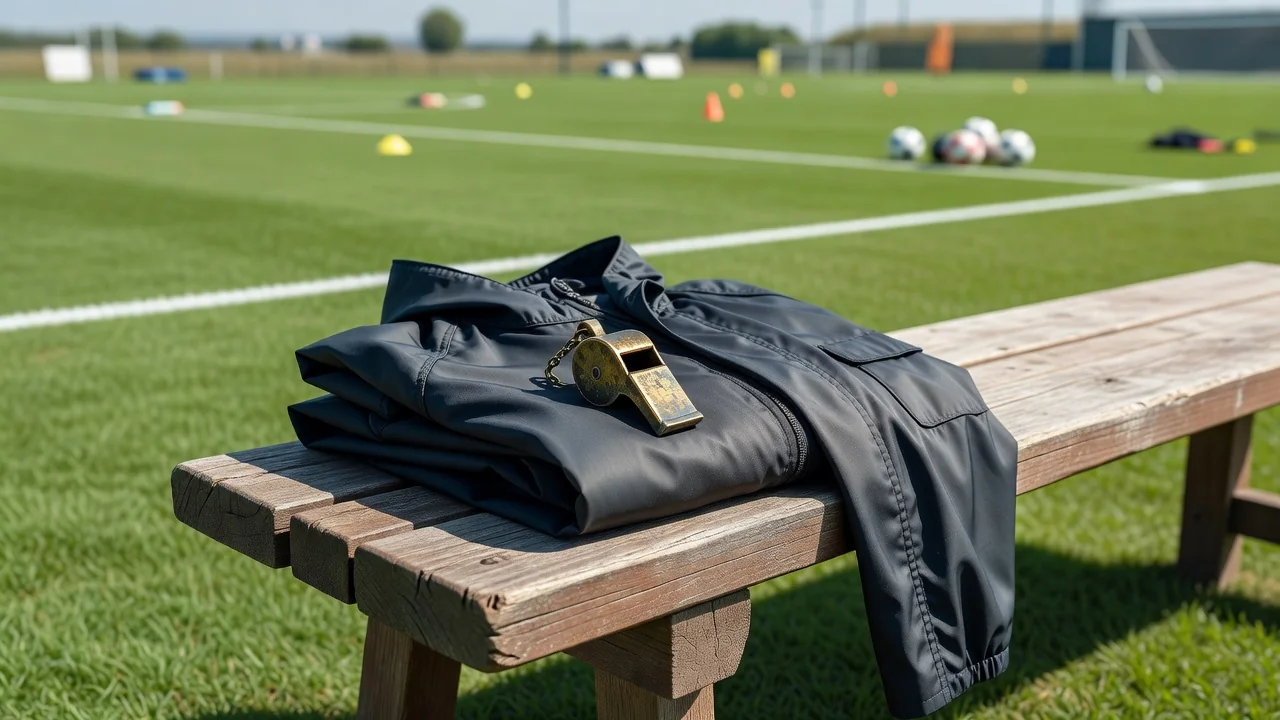
Mourinho's defensive idea has always been active rather than passive. His teams concede territory, not chances. At Chelsea in 2004-05 the title was won with 95 points and only 15 goals conceded in 38 league games, a Premier League record that still stands. The structure behind it was consistent.
- A compact middle. The distance between defence and midfield rarely exceeds a few metres, so opponents are forced wide into low-percentage crosses.
- Controlled pressing moments. His sides do not press constantly; they choose triggers, usually a back pass or a poor touch, and strike as one.
- Set-piece obsession. Corners and free-kicks, attacking and defending, are coached as separate phases with their own specialists and routines.
- A game-state plan. Scoring first matters enormously, because Mourinho teams defending a lead are historically among the hardest to break down.
- Psychological framing. Referees, media and rivals are deliberately drawn toward him and away from his players before big matches.
Milan 2010: the masterpiece
The purest document of the method is Inter's 2010 treble. In the Champions League semi-final against Pep Guardiola's Barcelona, Inter won 3-1 at home and then defended a 1-0 defeat at the Camp Nou with ten men for over an hour after Thiago Motta's red card, a performance of shifting zones and disciplined doubling that coaches still show on analysis courses. In the Madrid final, Inter beat Bayern 2-0 with two Diego Milito goals from a handful of chances.
At Real Madrid the same principles produced the counter-attacking 2011-12 La Liga title with a record 100 points and 121 goals, proof that the low block was a choice of means, not a limit of ambition. Later stops, a second Chelsea title in 2014-15, the 2017 Europa League with Manchester United, and the 2022 Conference League with Roma, extended the pattern into a third decade.

The legacy, fairly weighed
The criticism is real too. Squads built on extreme discipline tend to burn out under him in the third season, and young attackers can feel constrained by the risk budget. Yet even his detractors copy the homework culture: detailed opponent files, set-piece departments and game-state management are now standard at elite clubs, and Mourinho normalised all three.
| Season | Club | Achievement |
|---|---|---|
| 2003-04 | Porto | Champions League winners |
| 2004-05 | Chelsea | Premier League title, 15 goals conceded |
| 2009-10 | Inter | Treble: Serie A, Coppa Italia, Champions League |
| 2011-12 | Real Madrid | La Liga title, 100 points, 121 goals |
| 2021-22 | Roma | Europa Conference League winners |
The education behind the method deserves its own chapter. Mourinho never played professionally; he was a PE teacher who became Bobby Robson's translator at Sporting, Porto and Barcelona, then stayed on as an analyst under Louis van Gaal. Those years in the shadows explain the coaching: he learned to study opponents before he learned to lead men, and the dossier habit from the Barcelona years never left him. The Special One was, before anything else, the best-prepared one.
Defence, in Mourinho's hands, was never the absence of football. It was football with the risk spent deliberately, and the bill sent to the opponent.
Related articles
Pep Guardiola: Inside His Positional Play Philosophy
How Pep Guardiola built his coaching philosophy on positional play: the Cruyff roots, the five-lane pitch, and the ideas he took from Barcelona to Manchester.
2026-08-28
Mikel Arteta: How Arsenal Got Its Tactical Identity Back
Mikel Arteta rebuilt Arsenal on clear tactical ideas: structured build-up, fierce pressing and set-piece detail. How the Guardiola school shaped his project.
2026-08-21
Jürgen Klopp and the Making of Heavy Metal Football
Jürgen Klopp turned pressing into a spectacle. From Mainz to Dortmund and Liverpool, this is how heavy metal football was built and crowned in Europe.
2026-08-14