Pep Guardiola: Inside His Positional Play Philosophy
When Pep Guardiola took over Barcelona's first team in the summer of 2008, he had exactly one season of senior coaching behind him, with the club's B team in the fourth tier. Four years later he walked away with fourteen trophies, including two Champions Leagues, and a style of play that coaches are still copying in 2026. The idea at the heart of it was not pressing, and it was not possession for its own sake. It was positional play, a strict geography of the pitch that Guardiola absorbed as Johan Cruyff's pivot in the early 1990s and never let go of.
Understanding Guardiola starts with understanding that he coaches space, not players. His teams are built to be in the right place before the ball arrives, so the pass is always short, the receiver is always facing forward, and the opponent is always chasing. Everything else, from the pressing to the trophies, follows from that single conviction.
The Cruyff education and the five lanes
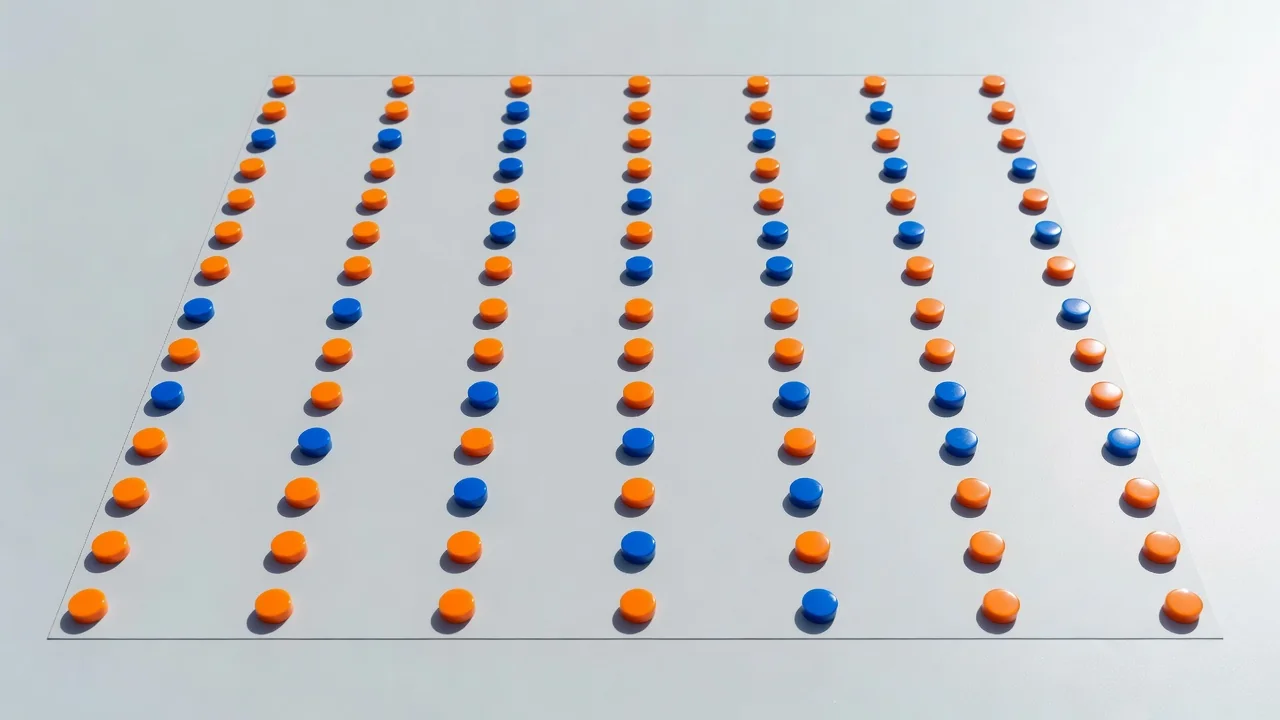
Guardiola grew into football as the deep midfielder of Cruyff's Dream Team, the Barcelona side that won four straight La Liga titles from 1991 to 1994 and the club's first European Cup in 1992. Cruyff divided the pitch into vertical lanes and demanded that no more than two or three players occupy the same lane, because players standing in line with each other are easy to mark and easy to press. Guardiola the player was the man who decided where the ball went next; Guardiola the coach simply scaled that job description to the whole squad.
The practical version of the idea, visible at Barcelona, Bayern Munich and Manchester City, is a pitch split into five vertical strips: two wings, two half-spaces and the centre. Players are assigned lanes and heights rather than fixed roles, and the shape stretches the opponent until a gap appears. The term juego de posición, positional play in Spanish football's own vocabulary, became the label for the whole school.
Superiorities: how the idea actually works
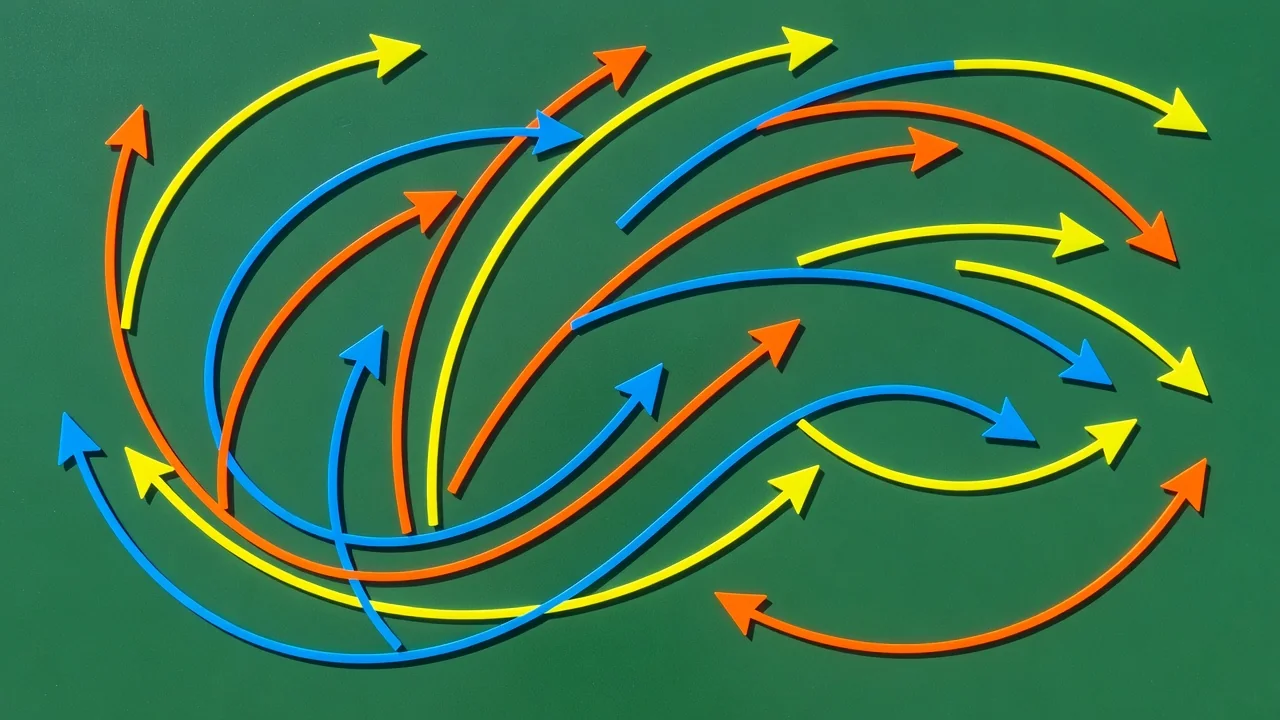
Guardiola's mentor in coaching theory was Juanma Lillo, the Spanish coach he sought out and even played under in Mexico at Dorados de Sinaloa in 2006. From Lillo he took the language of superiorities. A team should constantly create numerical superiority, two against one around the ball; positional superiority, players free between the opponent's lines; and qualitative superiority, your best player isolated against their weakest defender. Every drill in a Guardiola training week is designed to produce one of those three situations.
Two mechanisms make it repeatable:
- The third man. If a direct pass to a marked teammate is risky, the ball goes to a free player who then delivers it, because the marker cannot watch both.
- Inside occupation. Wingers or full-backs step into the half-spaces so the team always has numbers between the lines, not just on the flanks.
- Ball speed over dribbling. The ball moves faster than any defender, so one- and two-touch circulation is a rule, not a preference.
- Height discipline. At least one player always pins the opponent's back line, keeping it deep and honest.
- Immediate counter-pressing. When the ball is lost, the nearest players swarm it within seconds, because the team is already compact by design.
From Barcelona to Munich to Manchester
The method travelled because the principles are portable. At Bayern, from 2013 to 2016, Guardiola turned full-backs Philipp Lahm and David Alaba into auxiliary midfielders and won three Bundesliga titles while changing how German football thought about possession. At Manchester City, after a trophyless first season, he produced the 100-point Premier League campaign of 2017-18 and eventually the 2023 treble, sealed by Rodri's goal in the Champions League final against Inter in Istanbul.
The details changed every season. The 2009 Barcelona side used Lionel Messi as a false nine in the 6-2 win at the Bernabéu; the 2023 City side used John Stones stepping from centre-back into midfield. What never changed was the map underneath: five lanes, height, and a free man found through a third player.
What critics and students take from him
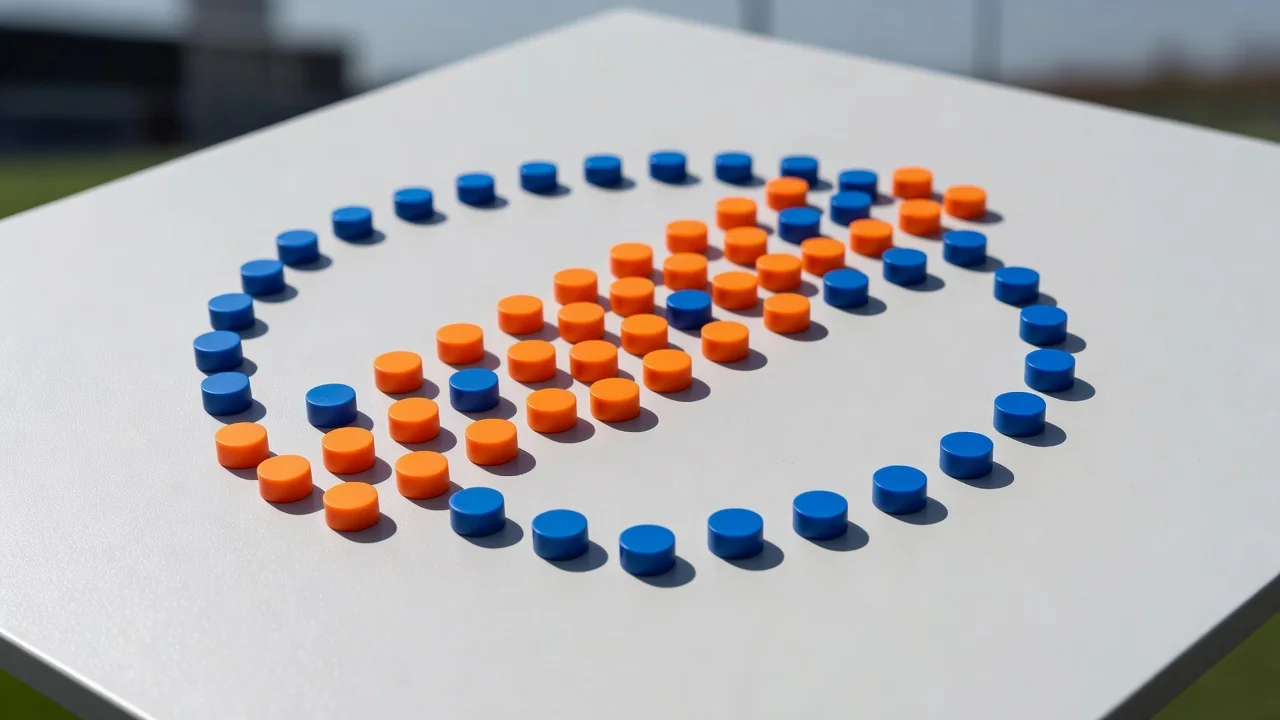
The standard criticism is that positional play can become sterile, circulating without risk when a deep block refuses to move. Guardiola's own answer has been to keep adding provocations: inverted full-backs, a goalkeeper used as an extra outfielder, centre-backs in midfield. The pattern is clear enough. When opponents solve one picture, he draws another on the same canvas.
| Club | Years | Signature achievement |
|---|---|---|
| Barcelona | 2008–2012 | 14 trophies, 2009 sextuple |
| Bayern Munich | 2013–2016 | Three straight Bundesliga titles |
| Manchester City | 2016– | 2023 treble, 100-point season 2017-18 |
The training ground is where the philosophy becomes muscle memory. Guardiola's sessions are built on position games, small-sided exercises in tight grids where players are restricted by zone, and on rondos that punish any pass played to a teammate standing in the wrong lane. Players who have worked under him, from Xavi to Kevin De Bruyne, describe the same experience: the first weeks feel like learning a new sport, and the moment it clicks, the game slows down. The coach's real product is that click, manufactured on purpose, one grid at a time.
For coaches studying him, the transferable lesson is not a formation but a habit of thought: decide where your players should stand before you decide what they should do. Positional play endures because it answers football's oldest problem, how to make eleven individuals act like one organised mind, and Guardiola remains its most demanding teacher.
Related articles
Mikel Arteta: How Arsenal Got Its Tactical Identity Back
Mikel Arteta rebuilt Arsenal on clear tactical ideas: structured build-up, fierce pressing and set-piece detail. How the Guardiola school shaped his project.
2026-08-21
Jürgen Klopp and the Making of Heavy Metal Football
Jürgen Klopp turned pressing into a spectacle. From Mainz to Dortmund and Liverpool, this is how heavy metal football was built and crowned in Europe.
2026-08-14
Carlo Ancelotti: The Quiet Art of Adaptive Management
Carlo Ancelotti wins without a dogma. A profile of the record Champions League coach and his quiet method: adapt the idea to the players, never the reverse.
2026-07-31