Positional Play: A Coach's Guide to Juego de Posición
Ask a Spanish-speaking coach what separates organised teams from talented ones and you will hear the same two words: juego de posición. Positional play is the grammar of possession football, a set of rules about where players stand that makes passing look easy. Barcelona made it famous, Pep Guardiola made it global, and today its vocabulary shows up in training grounds from Amsterdam to Buenos Aires.
The idea is often mistaken for simply keeping the ball. It is closer to chess: every piece has a zone, every move is meant to improve the position of the whole board, and the ball is just the fastest way to move the opponent.
The map: five lanes and three heights
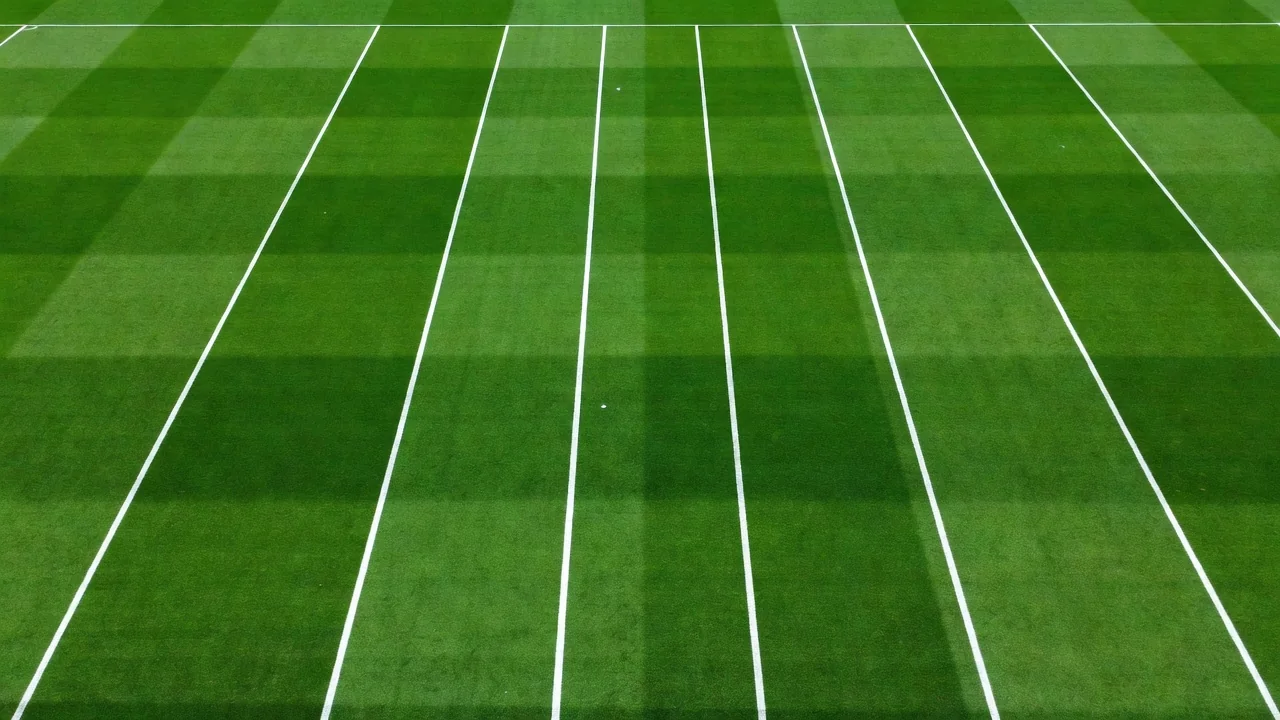
Positional play begins by dividing the pitch lengthways into five vertical strips: the two wings, the two half-spaces between wing and centre, and the central lane. The basic law is that teammates should not queue in the same lane at the same height, because players standing in a straight line can be marked by one opponent and pressed by one run. Spread across lanes and heights, the same eleven players create triangles everywhere.
The second layer is height. A positional team always keeps a player pinning the opponent's defensive line, midfielders between the lines, and a secure base behind the ball. When the map is respected, the man receiving the pass usually has time, forward vision and at least two options. When it is ignored, the coach stops the drill and walks the players back into their lanes, which is why positional schools are famous for repetitive rondos and position games.
The rules coaches actually teach
Every academy phrases them differently, but the working rules of juego de posición are remarkably stable.
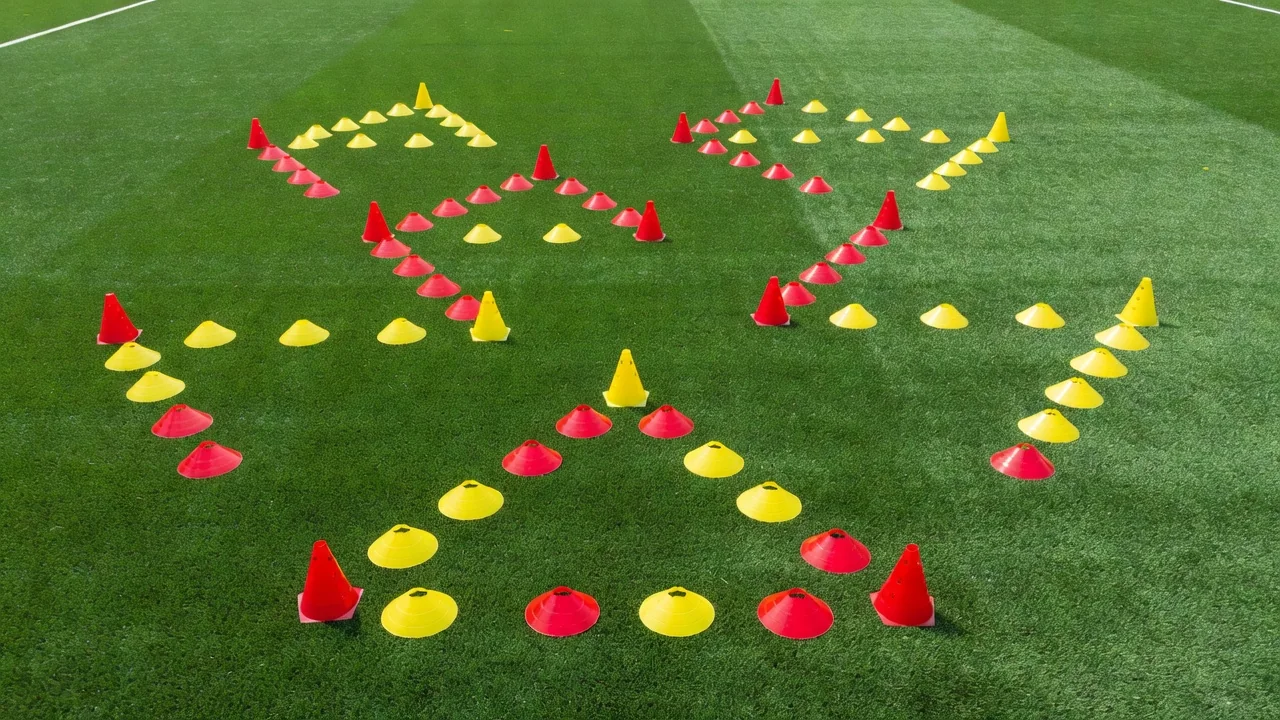
- Occupy distinct lanes. Never more than two teammates in the same vertical strip, and stagger the heights inside it.
- Play to the third man. If the ideal receiver is marked, pass to the free player whose next pass reaches him, using the marker's blind commitment.
- Support behind, beside and beyond. The ball carrier should always see a safe pass backwards, a bounce pass sideways and a risk pass forward.
- Attract to release. Short passing near the ball is meant to pull opponents across; the reward is the space they abandoned, attacked with one switch.
- Counter-press on loss. Positional attack is also defensive design: because the team is compact and balanced, the first reaction to losing the ball is to win it back immediately.
From La Masia to the world
The school grew at Barcelona's La Masia under the influence of Johan Cruyff, who placed a young Guardiola at the base of midfield to act as the team's compass. Guardiola the coach then carried the map to Bayern Munich and Manchester City, adding his own wrinkles: full-backs stepping inside, a winger holding the touchline wide, a centre-back joining midfield. Juan Manuel Lillo, Guardiola's mentor, supplied the theory of superiorities, numerical, positional and qualitative, that explains why the map works.
Its influence spread far beyond Spain. Erik ten Hag's Ajax reached the 2019 Champions League semi-final on positional principles, Roberto De Zerbi used them to make Brighton a build-up machine, and national teams from Spain's Euro winners to Argentina under Lionel Scaloni blend the grammar with their own dialects.
Criticisms and honest limits
The style's enemies say it can rot into sterile domination, endless circulation against a block that refuses to move, with possession statistics flattering a scoreless afternoon. The criticism is fair when the map becomes the goal rather than the tool. The best positional coaches answer with provocation: deliberate overloads on one side, sudden vertical passes, and dribblers who break the script when the opponent trusts it too much.
| Term | Meaning on the pitch |
|---|---|
| Half-space | Lane between wing and centre, prized for angled passes |
| Third man | Free player used to reach a marked teammate |
| La pausa | Receiver's pause that freezes defenders before releasing the ball |
| Rest defence | Players kept behind the attack to kill counters |
| Overload to isolate | Crowd one side to free a winger on the other |
For youth coaches, the school's greatest gift is its teachability. Positional play does not require elite athletes; it requires players who understand where to stand, which is why rondos and position games dominate academies from Amsterdam to Buenos Aires. A twelve-year-old who learns to scan before receiving and to offer a passing line after passing has learned the core skill, and every positional coach will say the same thing: the earlier the map is taught, the less it ever needs to be explained again.
Strip the jargon away and positional play is a promise: if everyone stands in the right place, simple passes become unstoppable. Two decades of trophies say the promise keeps.
Related articles
Rest Defence: The Invisible Structure Behind Attacks
Rest defence is the structure a team keeps while attacking. How elite coaches protect against counters with three-plus-two shapes and smart staggering.
2026-07-24
Inverted Full-Backs: Why Coaches Love the Inside Route
Inverted full-backs moved wide defenders into midfield and changed build-up forever. The idea's roots, its modern masters and the risks coaches accept.
2026-07-03
The False Nine: From Hidegkuti to Modern Revivals
The false nine confused defenders from Hidegkuti's Hungary to Guardiola's Barcelona. Why coaches drop the striker, what it creates, and why it keeps returning.
2026-06-19