
Free-Kick Design: Coaching the Perfect Dead Ball
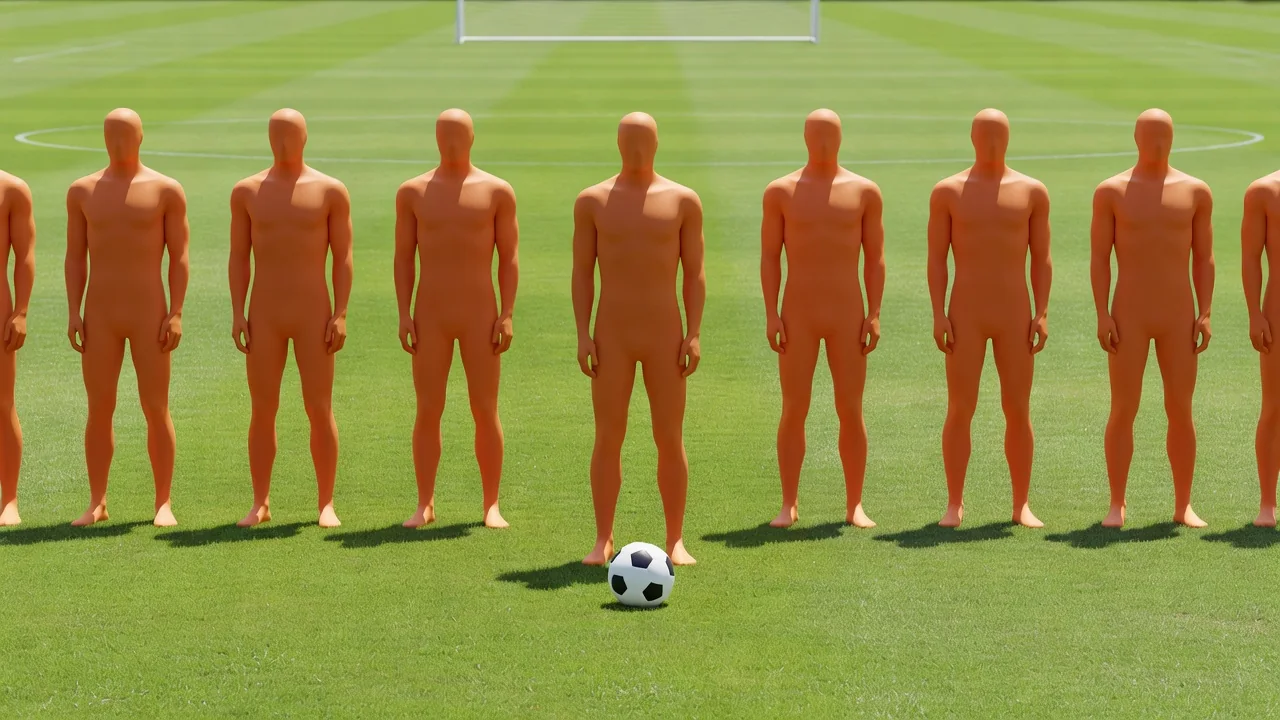
The direct free-kick is football's only play where time stops: the ball waits, the wall forms, and twenty-two players hold a position agreed in advance. It is also one of the most coached moments in the modern game, a blend of individual shooting craft and collective routine design that has produced its own specialists, its own analytics and a small pantheon of dead-ball artists.
Dead-ball design splits into two crafts that clubs now coach separately: the shot itself, and everything around it. The second craft is younger, and it is changing how the first one is defended.
The shot: knuckleball, curl and the artists
Dead-ball technique has its own schools. The curled strike over the wall, perfected by David Beckham, who scored eighteen Premier League goals directly from dead balls, relies on side-spin and placement into the corner the goalkeeper cannot cover. The knuckleball, struck with minimal spin so the ball wobbles unpredictably, was industrialised by Juninho Pernambucano, whose dead-ball goals for Lyon made him the position's folk hero, and later adopted by Cristiano Ronaldo.
Lionel Messi supplied the third model: pure precision, a compact run-up and the ball lifted gently over the wall into the top corner, a method that carried him past sixty career dead-ball goals. James Ward-Prowse brought the art back to England, chasing Beckham's league record with a technique so repeatable that analysts tracked his conversion rate like a penalty taker's. The common thread is repetition: the artists take hundreds of practice strikes a week, after training, for years.
The routine: walls, screens and decoys
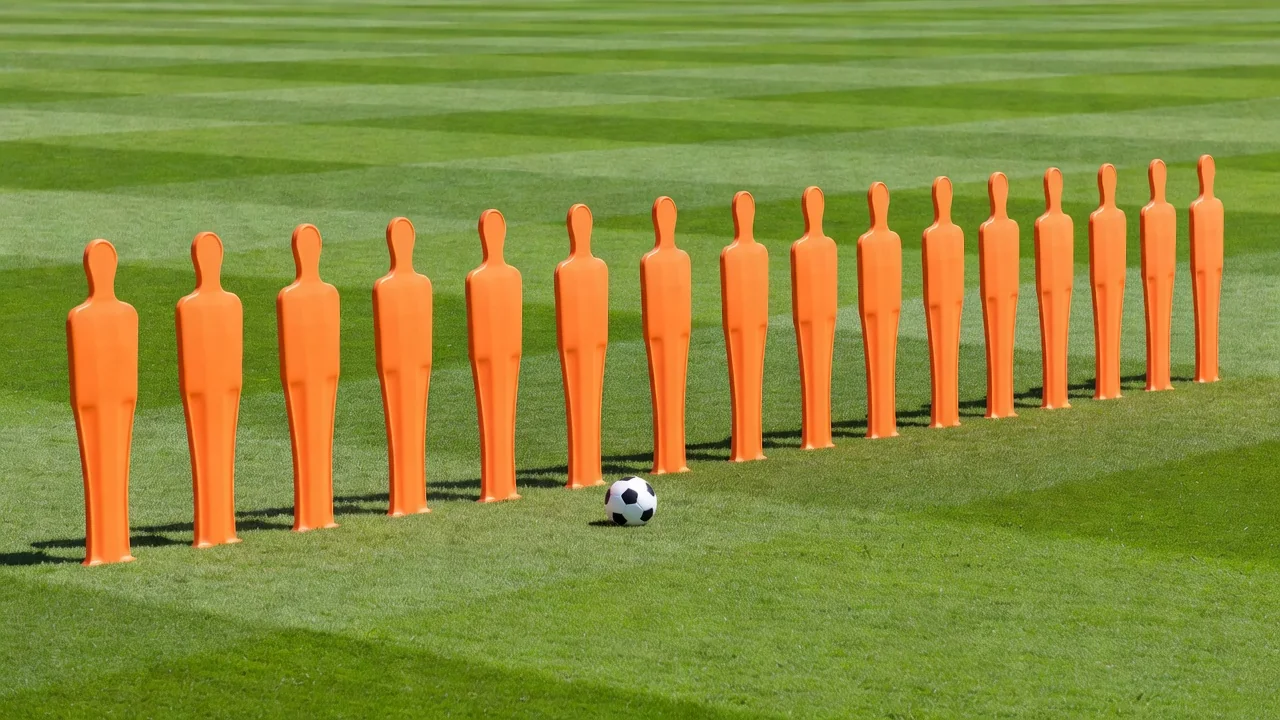
The collective craft grew from a simple observation: the wall is a defender with habits, and habits can be attacked. Modern dead-ball design treats the wall as part of the play.
- The added blocker. Attacking players join or stand beside the wall to obstruct the goalkeeper's view, or to peel out as the kick is taken, taking markers with them.
- The lay-off. A second player touches the ball sideways or backwards, changing the shooting angle and forcing the wall to shift at the last moment.
- The decoy run. A dummy runner steps over the ball, so the goalkeeper's set position is built for the wrong taker.
- The under-the-wall strike. Since walls now jump, low drives underneath them have returned as a designed option, with a teammate lying behind the wall as the defensive counter.
- The second ball. When the shot is not on, the kick becomes a disguised cross to a rehearsed zone, with blockers and decoys running corner-kick patterns.
Defending the dead ball
The defensive response has become its own science. Goalkeepers and analysts now study the taker's run-up: Messi's hips, Ward-Prowse's approach angle, Ronaldo's stance all leak information, and video departments brief the wall accordingly. The charging-down run, a defender sprinting from the wall as the ball is struck, trades structure for pressure; the player lying behind the wall, invented to stop the low shot, is now standard equipment across Europe.
The numbers frame the stakes. A dead ball within shooting range converts at a rate comparable to a decent open-play chance, and elite takers double or triple the average. For mid-table clubs, a single dead-ball specialist can be worth several league places over a season, which is why takers are scouted, walls are drilled and the twenty seconds of theatre keep getting longer.
Where free-kick design goes next
The frontier is personalisation. Analysts now build profiles of each goalkeeper's positioning bias and each wall's jumping habits, and the taker walks up already knowing which corner is offered. The artists will keep the headlines, but the margin increasingly belongs to the coach who treats the dead ball as twenty seconds of planned football.
| Taker | Technique | Signature |
|---|---|---|
| Juninho Pernambucano | Knuckleball | Unpredictable flight, decades of range |
| David Beckham | Curled side-spin | Record 18 Premier League dead-ball goals |
| Lionel Messi | Precision lift | 60+ career dead-ball goals over the wall |
| James Ward-Prowse | Repeatable curl | Relentless pursuit of Beckham's record |
The defensive wall's own evolution shows how deep the coaching now runs. Walls are assigned jumpers and stay-down blockers in advance; a defender lies behind the wall to kill the low drive; and the goalkeeper's starting position is chosen from data on the taker's last fifty attempts. Some clubs even rehearse a spare wall configuration for the decoy scenarios, so that a dummy run triggers a rehearsed reset rather than hesitation. Twenty seconds of theatre, it turns out, can hold a week of preparation on both sides of the ball.
Time stops for the free-kick, but the coaching never does. That is the real design.
Related articles
Set-Piece Coaches: Football's Newest Specialists
Set-piece coaches went from curiosity to Premier League necessity. Why clubs hire dead-ball specialists, what they actually do, and the goals that prove it.
2026-08-18
Zonal vs Man Marking: Set-Piece Defence Debated
Zonal or man marking at set pieces? The debate every coaching staff settles differently. Strengths, weaknesses and the hybrid systems in between.
2026-08-04
Thomas Grønnemark and the Throw-In Revolution
Thomas Grønnemark made the humble throw-in a science. How the Danish coach changed Liverpool's restarts and why clubs now study every touchline ball.
2026-07-15