
Set-Piece Coaches: Football's Newest Specialists
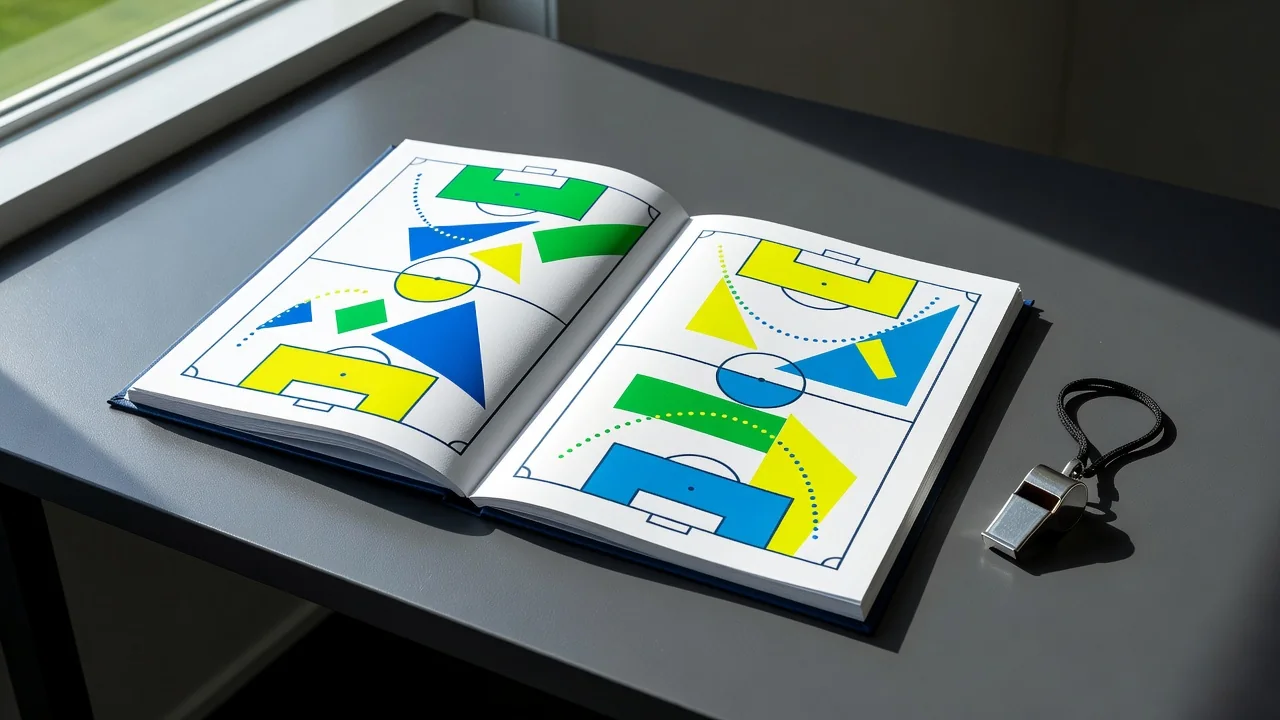
Two decades ago, the set piece was the training ground's afterthought: ten minutes on Friday, a crossed arm from the assistant, and hope. Today Premier League clubs employ full-time set-piece coaches, analysts film every corner in the league, and title races turn on near-post flicks. The rise of the set-piece specialist is the clearest example of marginal gains becoming a department.
The logic was always hiding in plain sight. Roughly a third of goals in top leagues come from dead-ball situations, yet for generations clubs devoted a fraction of their coaching time to them. The first clubs to close that gap found goals lying unclaimed on the training pitch.
The pioneers: from Midtjylland to the mainstream
The modern set-piece movement has a capital: Herning, Denmark. FC Midtjylland, owned by Matthew Benham's analytics-driven group, treated set plays as a measurable market inefficiency and built a pipeline of routines and specialist staff that helped win the Danish title in 2015. Thomas Grønnemark's throw-in work grew from the same environment, and Brentford, Benham's English club, imported the model whole, reaching the Premier League with set pieces as a core weapon.
The dam broke when the elite clubs followed. Manchester City hired Nicolas Jover from Brentford in 2019; Arsenal hired him from City in 2021 and promptly became the league's most productive set-piece side. Gianni Vio, who claims to have designed thousands of routines, worked for Italy's Euro 2020 winners and later Tottenham. By the mid-2020s, a set-piece coach is as standard as a goalkeeping coach.
What a set-piece coach actually does
The job is far broader than drawing arrows on a whiteboard. A modern set-piece department owns the entire dead-ball economy of the club.
- Routine design. Attacking corners, wide free-kicks and throw-ins are scripted with blockers, decoys and timed runs, tailored to the squad's aerial strengths.
- Opponent analysis. Every rival's marking scheme is scouted: who zones, who tracks, which goalkeeper stays home, which defender switches off at the far post.
- Defensive organisation. Conceding from set plays is treated as a coaching failure, so the specialist owns the marking assignments and the first-contact drills.
- Recruitment input. Clubs now sign players partly on set-piece value, tall centre-backs with leap and timing, and delivery specialists whose corners hit zones, not crowds.
- Training-ground repetition. Routines are rehearsed until the runs are automatic, usually in short daily blocks rather than one weekly session.
The arms race and its sceptics
The gains are documented. Arsenal's set-piece output under Jover became a league benchmark, and across the Premier League the share of goals from dead balls has climbed as routines grew more sophisticated. American football's influence is visible: screens, pick plays and misdirection runs translated into footballing legality, with referees and lawmakers now debating where blocking ends and obstruction begins.
The sceptics make two fair points. First, fashion follows success: clubs copy the routines without the squad profiles that make them work, and a corner playbook cannot substitute for a dominant striker. Second, the marginal gains era has a ceiling, because every opponent now scouts the same routines and rehearses counters. The set-piece coach's real product is not a trick but a system that keeps producing new ones.
Where the specialisation goes next
The frontier has already moved to throw-ins, goal-kick routines and the second-ball phase after the first contact, each with its own metrics. Youth academies have begun teaching set-piece roles as a curriculum, and the job title itself, unheard of in 2015, now appears on Champions League staffs.
| Coach | Known for |
|---|---|
| Thomas Grønnemark | Throw-in science at Midtjylland and Liverpool |
| Nicolas Jover | Set-piece programmes at Brentford, Manchester City and Arsenal |
| Gianni Vio | Thousands of routines; Italy's Euro 2020 staff |
| Austin MacPhee | Aston Villa's dead-ball design and analysis |
The job market tells the story in miniature. A decade ago, set-piece responsibilities were scattered among assistants; now dedicated roles appear in vacancy listings at Champions League clubs, with salaries to match the goals they are expected to produce. The pathway has professionalised too: analysts specialising in dead balls are hired straight from data departments, and coaching courses have begun adding set-piece modules to their licences. What began as one Danish club's edge is now an established profession with its own career ladder.
Football spent a century treating a third of its goals as luck. The set-piece coach is simply the person who read the statistics and asked for the keys.
Related articles
Zonal vs Man Marking: Set-Piece Defence Debated
Zonal or man marking at set pieces? The debate every coaching staff settles differently. Strengths, weaknesses and the hybrid systems in between.
2026-08-04
Free-Kick Design: Coaching the Perfect Dead Ball
Free-kick design blends shooting craft with rehearsed routines. How coaches prepare dead balls, pick the taker and exploit the wall's weakest habits.
2026-07-22
Thomas Grønnemark and the Throw-In Revolution
Thomas Grønnemark made the humble throw-in a science. How the Danish coach changed Liverpool's restarts and why clubs now study every touchline ball.
2026-07-15