
Corner Kick Routines: Inside the Modern Playbook

A corner kick lasts about five seconds and can involve more rehearsed detail than the other eighty-nine minutes combined. Blockers holding their ground a stride from the goalkeeper, decoy runners dragging markers out of zones, a delivery aimed at a patch of grass rather than a forehead: the modern corner is choreographed theatre, and the coaches who direct it are among football's fastest-rising specialists.
The craft changed when clubs started counting. Once analysts measured how many goals a season's corners were worth, the afterthought became a production, with its own playbook, its own scouting and its own vocabulary borrowed shamelessly from basketball and the NFL.
The anatomy of a modern routine
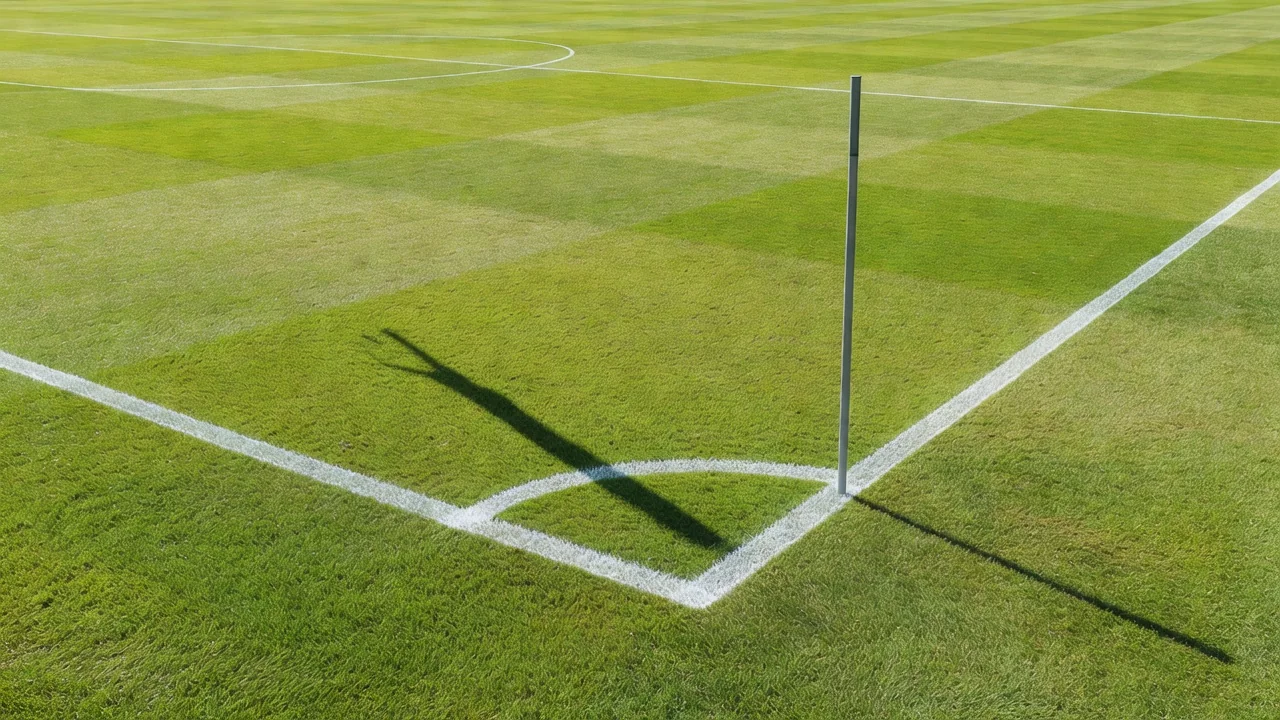
Every corner routine answers the same engineering problem: how to give one attacker a free run at the ball in a crowded eighteen-yard box. The standard solutions are now taught at every level. Blockers, sometimes called screens, position themselves in the paths of the most dangerous markers, legal as long as they hold their ground rather than moving to impede. Decoy runners sprint across zones to pull defenders out of shape. And the taker delivers to a zone, near-post flick, penalty spot, or far-post isolation, chosen from video of the opponent's marking scheme.
The near-post flick is the elder statesman of routines: a glancing touch at the front post that changes the ball's line and leaves the far-post runner with a tap-in. The modern variation adds a second deception, two players converging on the near post so the marker cannot tell who will attack the ball.
The taker's craft and the data behind it
Analytics changed delivery first. Tracking data showed that inswinging corners, curling toward goal, produce shots more often than outswingers, because the ball's flight attacks the six-yard box and defensive touches are dangerous. Clubs responded by assigning corners to the foot that produces the inswinger on each side, left-footed takers from the right, and by training takers to hit target zones within a metre, like a golf swing rehearsed to a landing patch.
The short corner is the data's second child. Teams take more short corners than a decade ago because the numbers show they generate cleaner shooting positions: the defence must step out, the offside line resets, and the attacking team can re-cross into a reorganised box or work the ball to an unmarked edge-of-area shooter. The trade-off, a wasted ball if the first pass is poor, keeps the traditional crowd-the-box corner alive as a variation rather than a default.
Defending the theatre
For every routine there is a defensive counter-routine, and the marking debate, zonal, man-to-man, or hybrid, is conducted with religious intensity in analysis rooms. What has changed is the detail: defenders are assigned specific opponents by aerial profile, a spare player guards the edge for the short option, and goalkeepers are coached to claim anything inside their zone with the centre-backs clearing the runway.
The tools attackers deploy, and defenders prepare for:
- The block or screen: a stationary attacker occupying the marker's route, the routine's legal foundation and the referee's hardest judgement.
- The bunch: four attackers clustered together who scatter on the kick, so markers cannot be assigned until the runs begin.
- The near-post flick: first contact at the front post redirecting the ball across goal for the far-post runner.
- The edge decoy: one attacker loitering outside the box to pull a defender away from the crowded zones.
- The second ball: rehearsed positions for the clearance, because most corners are decided after the first header, not by it.

The routines that decided trophies
The corner's biggest stage moments are part of coaching folklore. Liverpool's fourth goal against Barcelona in the 2019 semi-final, Trent Alexander-Arnold's quickly taken corner caught the entire defence walking, is shown in every set-piece course as proof that alertness is itself a routine. Arsenal's title challenges under Mikel Arteta were built partly on a corner programme that turned Gabriel Magalhães into one of the league's most frequent scorers from dead balls.
| Routine | Mechanism | Best against |
|---|---|---|
| Inswinger to six-yard box | Flight attacks goal; defensive touches are fatal | Zonal defences with a passive line |
| Near-post flick | First contact redirects across goal | Man-marking with front-post gaps |
| Short corner | Defence must step out; box reorganises | Aggressive line-holding defences |
| Far-post isolation | Best jumper isolated on weakest marker | Hybrid schemes with mismatches |
The lawmakers have been forced to pay attention. As blocking and screening migrated from basketball into the penalty area, refereeing bodies issued fresh guidance on impeding, and officials now brief captains before matches about what will be tolerated at corners. The grey zone remains vast, and coaches exploit it deliberately, pushing routines a metre further until the whistle tells them to stop. The next regulatory flashpoint is already visible: contact with goalkeepers, long tolerated, is increasingly penalised as the set-piece arms race tests the laws themselves.
The corner flag used to mark a rest break in the action. Now it marks the moment the analysts' week of work goes live.
Related articles
Set-Piece Coaches: Football's Newest Specialists
Set-piece coaches went from curiosity to Premier League necessity. Why clubs hire dead-ball specialists, what they actually do, and the goals that prove it.
2026-08-18
Zonal vs Man Marking: Set-Piece Defence Debated
Zonal or man marking at set pieces? The debate every coaching staff settles differently. Strengths, weaknesses and the hybrid systems in between.
2026-08-04
Free-Kick Design: Coaching the Perfect Dead Ball
Free-kick design blends shooting craft with rehearsed routines. How coaches prepare dead balls, pick the taker and exploit the wall's weakest habits.
2026-07-22